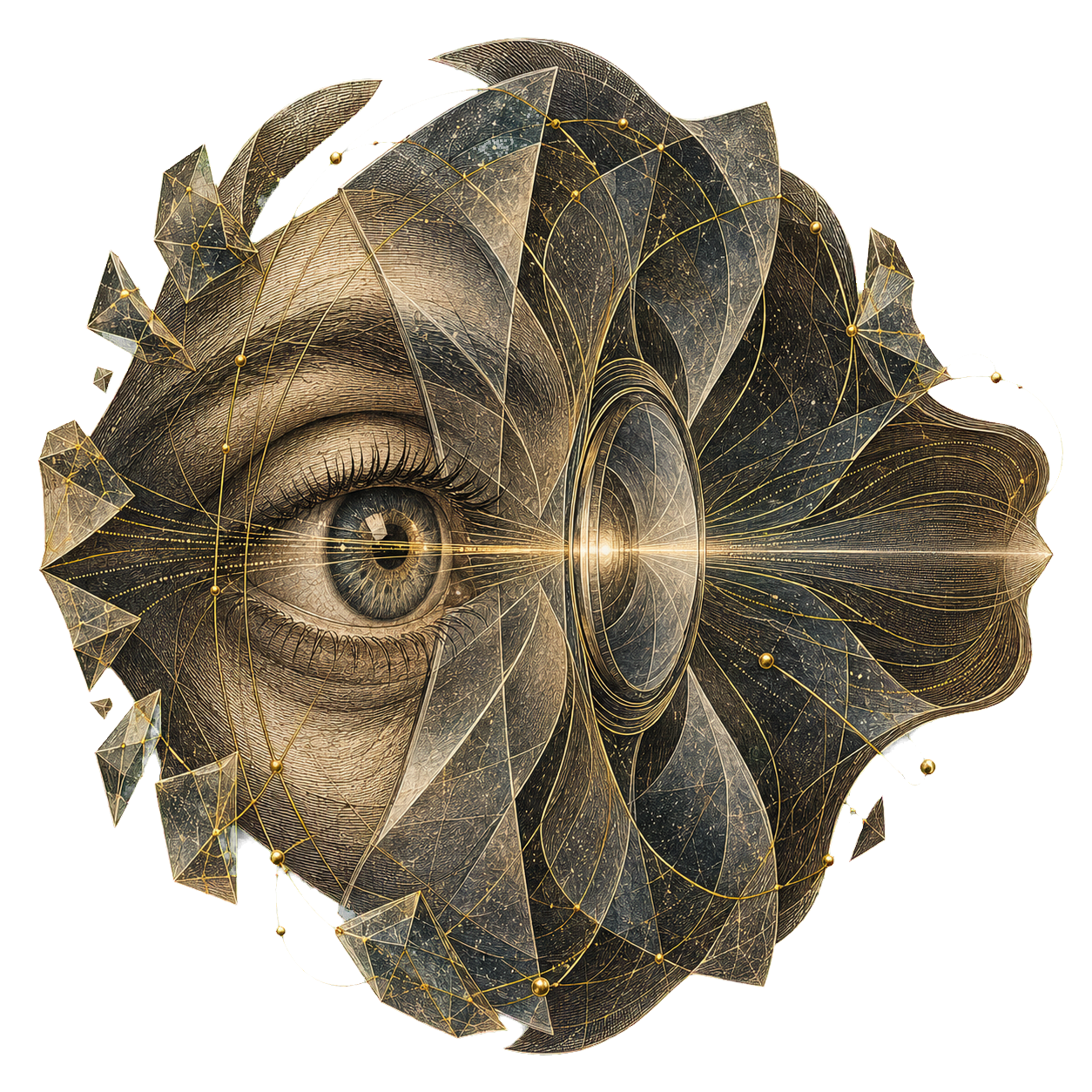
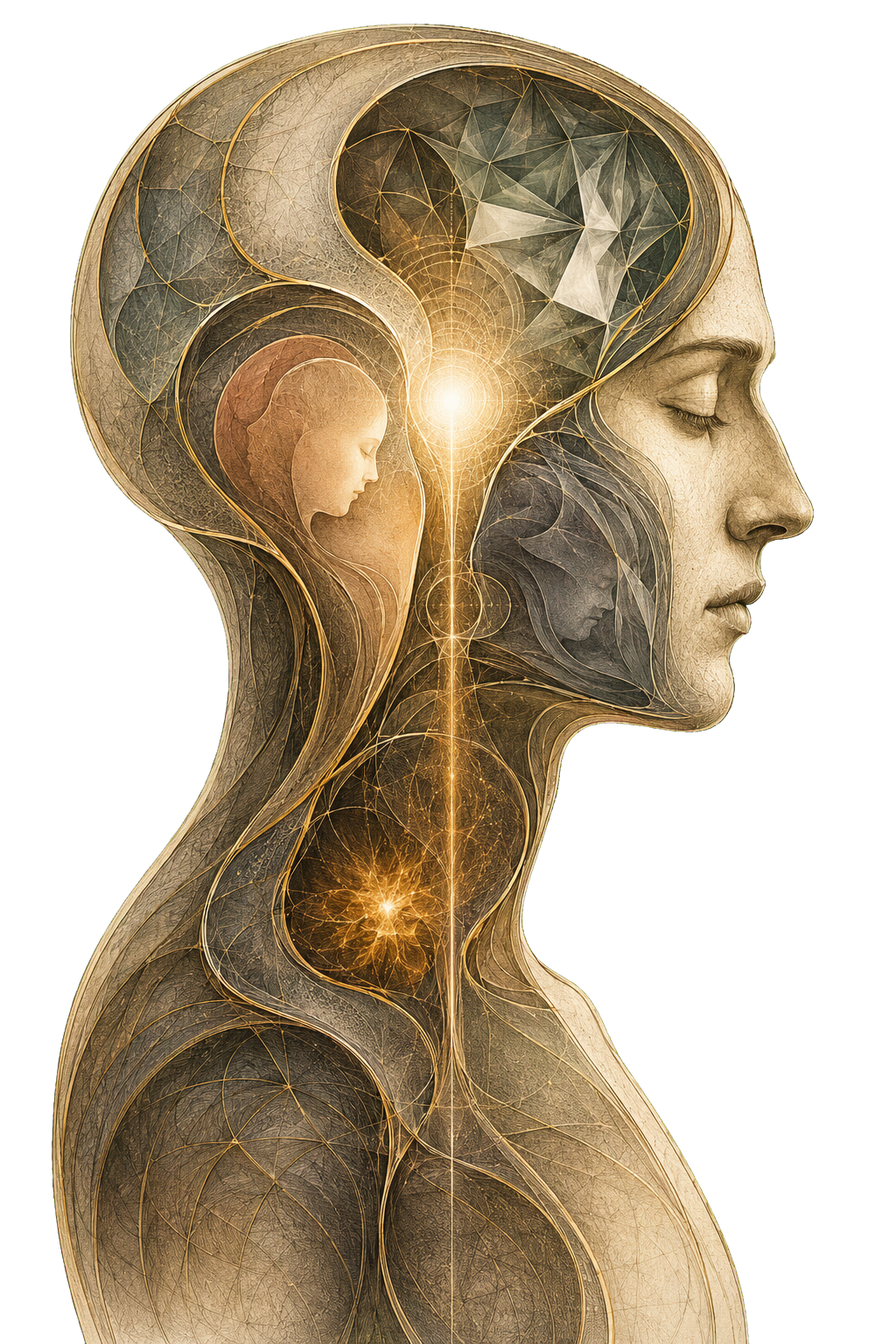
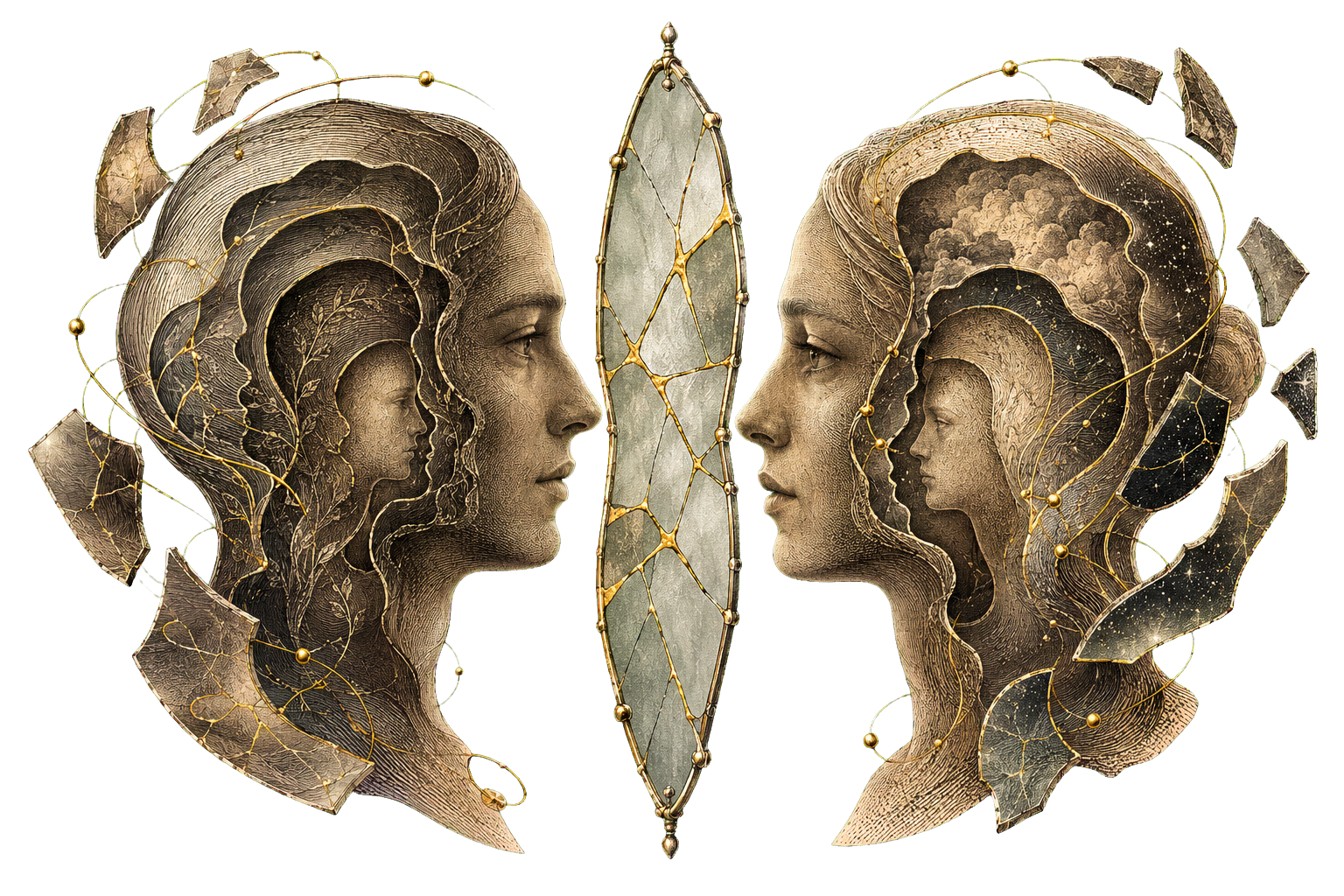
See how the lens was formed.
The lens did not shape itself. It was ground by belief, body, emotion, protection, energy, and relationship—often before you knew you were looking through it.
01The Power of Perception+
Perception is not a passive recording of reality. Story, mindset, energy, and focus shape the meaning you make—and the response that follows. This chapter begins separating what happened from the lens through which you experienced it.
02Belief Systems and the Subconscious+
Beliefs can begin as early conclusions, inherited messages, or protective adaptations and then operate beneath awareness as if they were facts. This chapter brings those patterns into view so they can be examined rather than mistaken for fate.
03Trauma and the Body+
Trauma is approached as a wound carried by the body and nervous system, not a character flaw. The chapter offers language for understanding present-day patterns while keeping trauma treatment in the hands of qualified care when deeper clinical support is needed.
04Meeting the Inner Cast+
The mind contains different voices, roles, and protective strategies. Drawing from parts work and the idea of complexes, this chapter reframes inner conflict as multiplicity—not brokenness—and begins the work of listening without letting one part become the whole self.
05Emotions and Anxiety as Signals+
Emotions are treated as signals on the dashboard rather than permanent identities or enemies to suppress. This chapter asks what anxiety, anger, sadness, and other feelings may be communicating, while recognizing when a signal calls for professional support.
06The Energetic Self+
This chapter explores how state and orientation can influence what feels possible and what you are able to notice. Scientific findings, wisdom traditions, and Ali’s lived experience are kept in their proper lanes so curiosity never requires surrendering discernment.
07The Mirror of Relationships+
Relationships reveal patterns that solitude can leave hidden. This chapter explores what triggers can show you about your lens, wounds, and protectors—without turning the mirror into blame or erasing another person’s behavior, context, or responsibility.